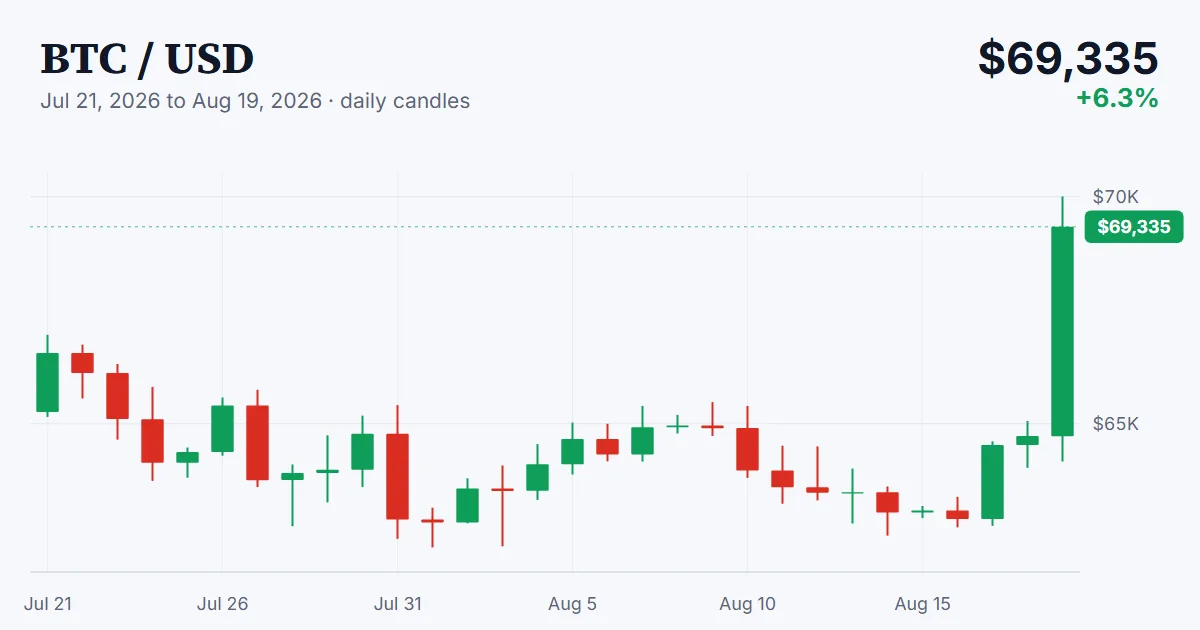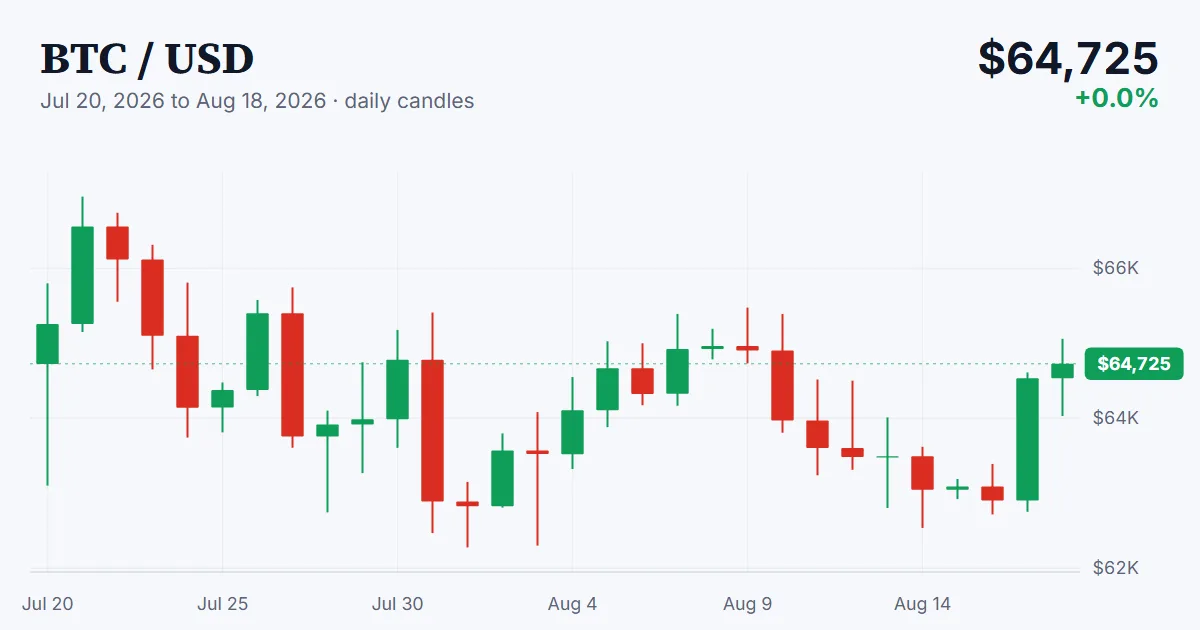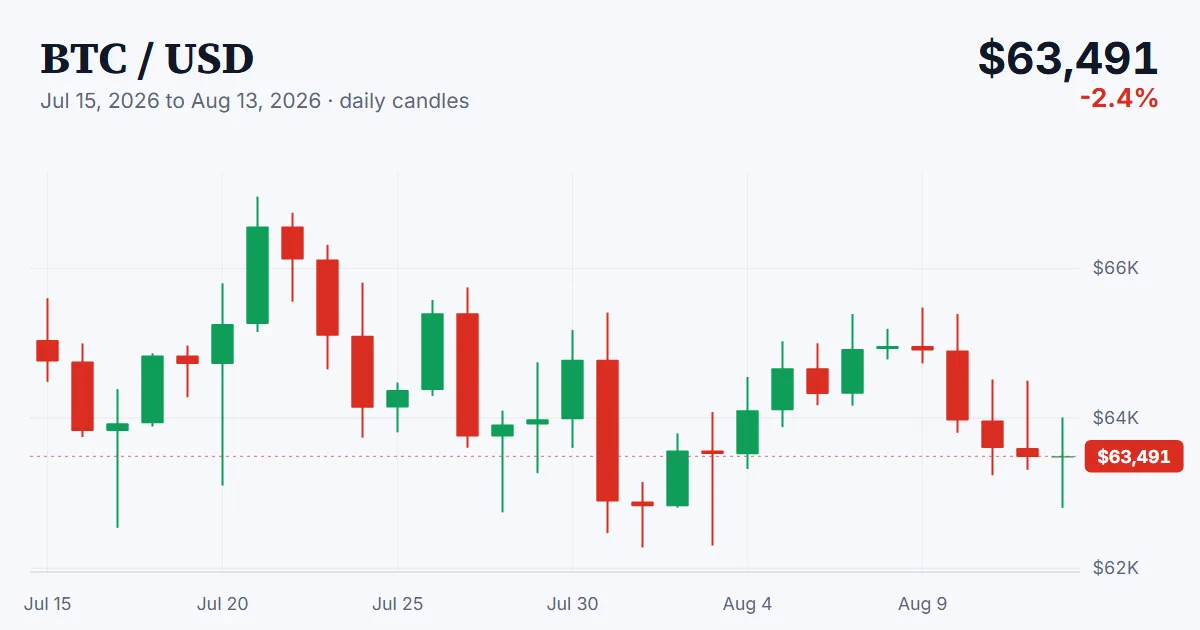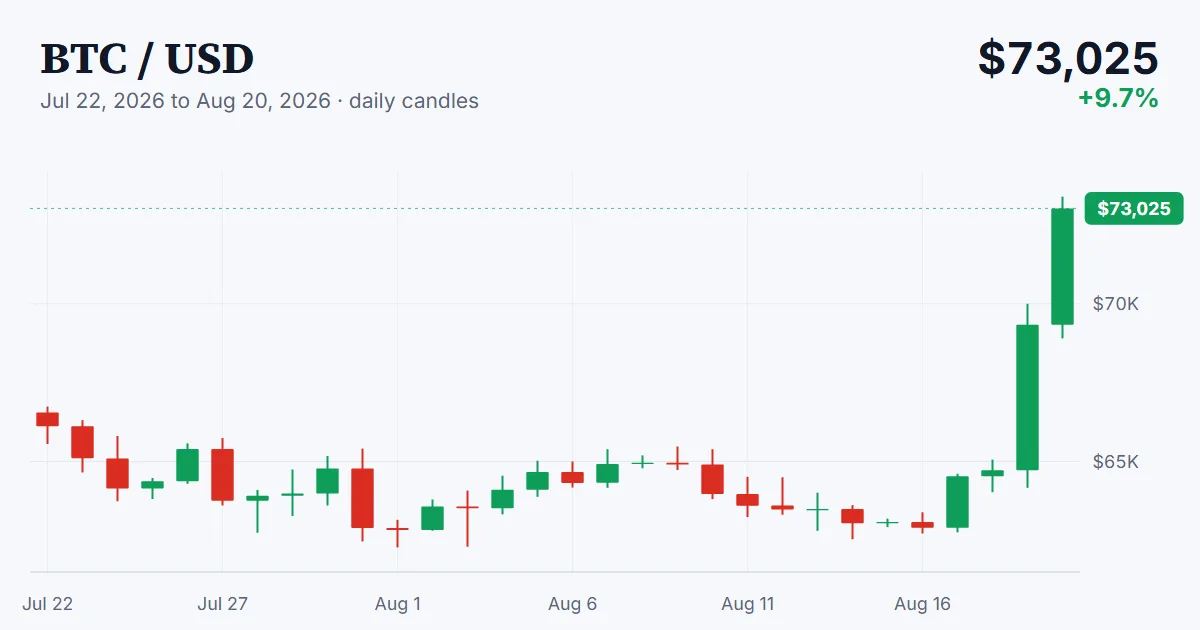
The range we have written about every day for three weeks is gone, and the thing that broke it did not come from crypto at all. On August 19 Treasury Secretary Scott Bessent announced that long-end debt buybacks would double from $2 billion to at least $4 billion per operation, covering 10-to-20-year and 20-to-30-year securities, with the number of operations per quarter doubled as well, per CNBC. Long yields fell hard on the news, the 30-year from 5.34 percent to 5.19 percent and the 10-year to 4.647 percent, per crypto.news, and every rate-sensitive asset got repriced at once. Bitcoin ran from an intraday low of $64,100 to a peak of $69,500, an 8.2 percent move in under 12 hours and its highest print since early June. Ether did even better, gaining around 10 percent to reclaim $2,000 for the first time since June. Yesterday we wrote that the market was walking into a dense Washington calendar flat and slightly braver than Monday. It turned out the calendar entry that mattered was one nobody was watching.
A bond-market lever, not a crypto headline
The mechanics matter because they explain why the move was so violent. Treasury buybacks are operations in which the government repurchases its own longer-dated bonds, supporting prices and pulling yields down at the long end of the curve. Doubling their size and frequency in one announcement, on a quiet August afternoon, caught bond desks leaning the wrong way. Evercore ISI analysts described it as "hitting bond shorts with a surprise buyback on an August day with thin liquidity," and the squeeze in bonds spilled straight into everything priced off those yields. Lower long rates soften the discount on risk assets, weaken the dollar at the margin and, in crypto's case, land on a market that had spent three weeks compressed between $62,000 and $66,000 with positioning stale on both sides. The irony is thick: the same afternoon delivered the Fed minutes and a White House crypto summit, the two events the whole range had been waiting on, and neither moved the tape a fraction of what a Treasury refunding technicality did. Per The Crypto Times, the regulatory backdrop, including the SEC's proposed crypto framework from earlier in the week, gave the rally room to breathe, but the ignition was fixed income.
Shorts paid for the trip, and the calendar is not done
The fuel was leverage. Per crypto.news, roughly $1.44 billion in short positions were force-closed across major exchanges within 24 hours, with $1.29 billion of that concentrated in a single hour as liquidation engines chased the move, more than 110,000 traders hit, and short liquidations outnumbering longs by about 8.6 to 1. The largest single casualty was a $32 million ETH-USD position on Bitget. That ratio is the signature of a squeeze rather than a considered repricing: the first leg of the move was buyers who had no choice. What gives it a chance of sticking is that patient money had already been leaning in. Spot bitcoin ETFs took in $487 million across August 17 and 18, per crypto.news, with BlackRock's fund alone absorbing $143.6 million on the 18th, so the breakout landed on two days of quiet accumulation rather than an empty book.
What happens next is a test with dates attached. The expanded buyback schedule does not actually begin until September 9 and runs through November 4, per the Treasury calendar reported by crypto.news, so Tuesday's move priced an intention, not a flow. Before any of that money moves, the Kansas City Fed hosts Jackson Hole from August 27 to 29, with Fed Chair Kevin Warsh delivering the keynote on August 28 under a payments-and-innovation theme, per TechTimes, an unusually crypto-adjacent agenda for that stage. The clean technical question is whether $66,000, the ceiling that rejected every attempt since late July, now behaves as a floor. An 8.6 to 1 liquidation ratio says this rally was born as a squeeze; the ETF tape says it may have been adopted by steadier hands. We would rather watch that handoff than predict it, and nothing here is trading advice.