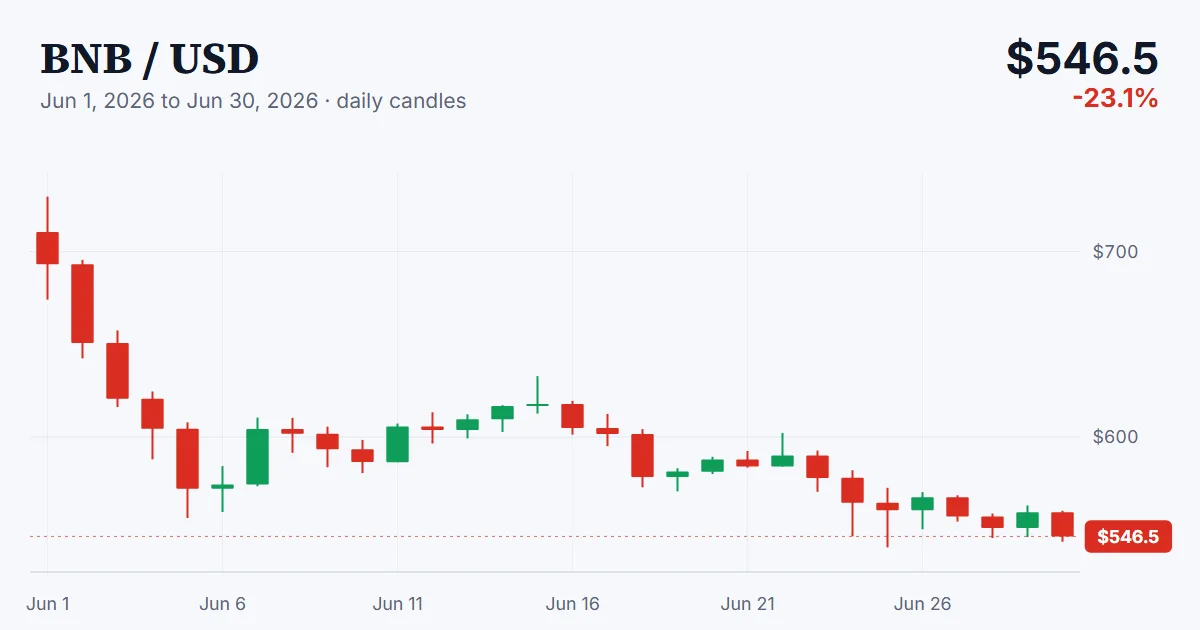
Binance opened spot trading for Re (RE), a tokenized reinsurance protocol, on June 18 at 14:00 UTC. It was the headline addition in a June 2026 listing month that leaned toward real-world assets (RWA), tokenized versions of assets such as treasuries, credit and insurance premiums, while the broad market printed two-year lows.
A listing slate works as a sentiment gauge. Individual announcements get the attention, but the pattern across a month shows what the largest exchange believes its customers want to buy. In June, with prices weak, the answer was real-world assets.
The month in listings
Re is profiled in detail on its listing page. Reinsurance yield is about as far from crypto price swings as returns get, and that is the pitch: premiums do not care whether Bitcoin holds 60,000.
Around that headline listing, the first half of 2026 in Binance's announcement archive shows a run of infrastructure and asset-backed additions. Gensyn, a decentralized AI compute project, listed in May. Plume, an RWA chain, completed its Alpha-to-spot graduation, Binance's step from its Alpha section to full spot trading.
Memecoin slots were increasingly filled by tokens moving up that graduation ladder rather than by surprise front-door listings. The exceptions stand out. When a memecoin did get a major-venue moment, as Fartcoin did with its Coinbase pop, it stood apart from a slate of asset-backed listings.
Decentralized AI compute.
Tokenized reinsurance.
RWA chain graduation.
Why the curation shifted
Listings are commercial decisions, as our guide explains, and the commerce moved. ETF outflows were draining the majors, and speculative appetite was defecting to AI equities. The buyers still active inside crypto skew toward yield: tokenized treasuries, credit funds and insurance-linked returns.
In a bear market demand concentrates in assets whose yield does not depend on crypto sentiment, and RWA tokens are the tradable wrapper on that appetite.
Exchanges list what those buyers will trade. That makes the slate a read on buyers more than on Binance's own preferences, and we treat RWA season there as inventory management, not ideology.
A second effect follows. Every RWA listing that goes smoothly lowers the perceived cost for the next traditional-finance issuer weighing tokenization. The legal path has a precedent, the venue has an intake process, and the buyers demonstrably exist. That is how a defensive rotation can become a pipeline.
The next candidates, in our view, are the rest of the yield world: private credit funds, commodity trade finance and insurance-linked notes. Each is watching whether the wrapper holds up in public before committing its own paperwork.
What it means for traders
RWA listings trade differently: shallower pops, slower bleeds and holder bases that read prospectuses instead of timelines. A listing playbook calibrated on memecoins fits them poorly. The standard homework still applies to a reinsurance token as it does to a memecoin: float, unlocks and who exits into the liquidity. The wrapper is crypto even when the yield is not.
An RWA label does not make a token safe. The underlying asset class may be real while the token's structure, custody, legal claims and float schedule carry the usual crypto risks. The label describes the narrative, not the risk profile.
We will track the theme by composition. Each month's listings on the board get a category mix, and the RWA share is now a number to follow.
The second test is retention, whether the RWA names hold their volumes after listing week, since rotations that reverse show up there first. If speculative appetite returns and the slate flips back toward memecoins and AI tickers, that shift will show on this site before it becomes a headline. If the RWA share keeps rising across several months, the rotation is real rather than a one-month cluster.